

The Case for Woo-Woo
my response to the best critique of popular metaphysics


"Opposition is true Friendship," wrote poet-mystic William Blake in 1793 in The Marriage of Heaven and Hell.
But—only worthy opposition.
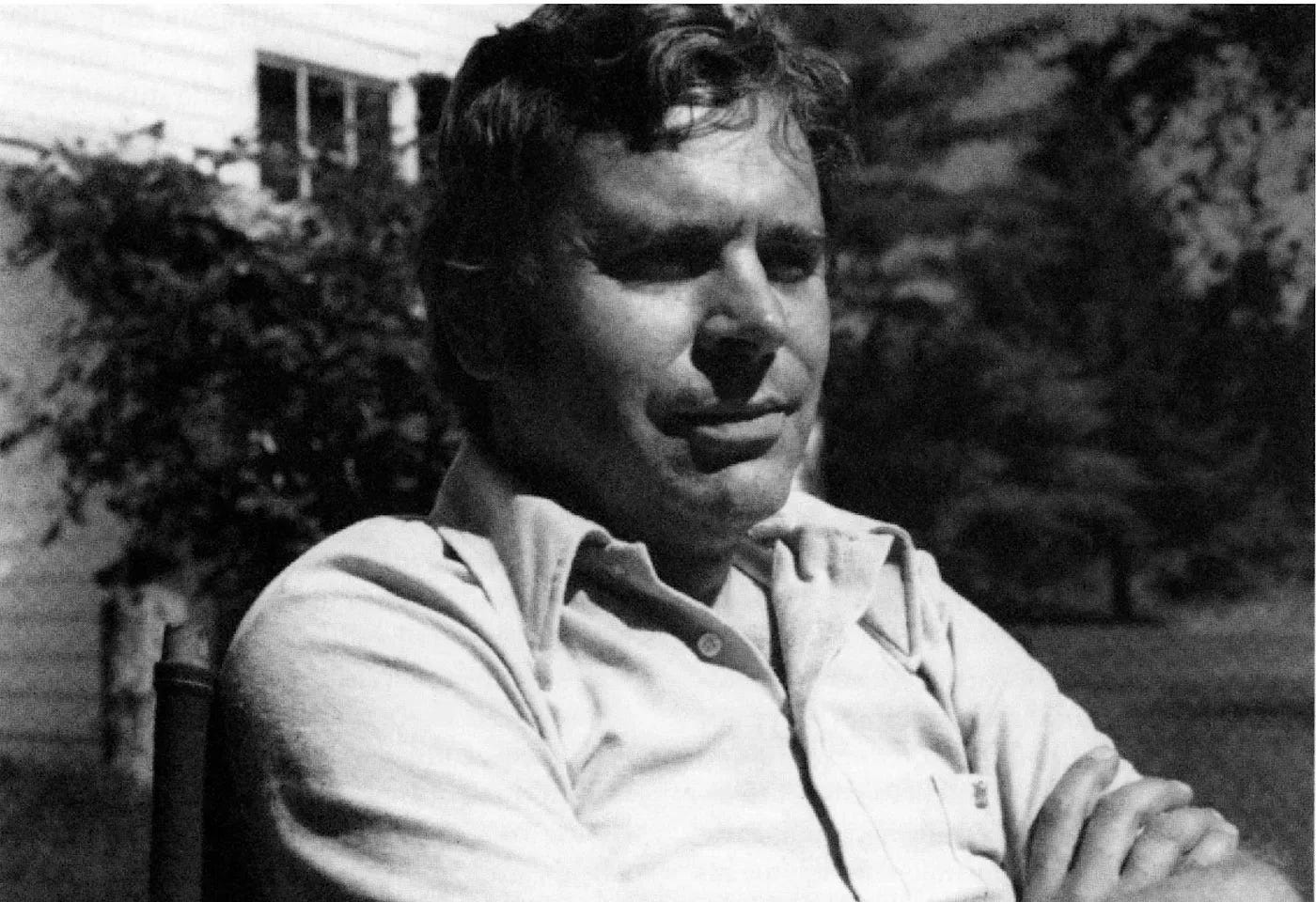
In that vein, I terribly miss the influence of historian and philosopher Christopher Lasch (1932–1994), with whom this article opens and ends.
Lasch was one of the most trenchant and formidable critics of New Age and alternative spirituality—woo-woo in popular epithet—as he was of many facets of what he considered America’s cultural decline. He foresaw our current political crackup and pierced the hypocrisy and self-inflation of selfish spiritualities and philosophies, including some to which I ascribe.
Lesser critics argue taste and call it reason. Lasch argued values—and arrived at reason.
Let me define terms. I consider New Age a radically ecumenical culture of therapeutic spirituality. Its modus operandi is positive-mind metaphysics or, more commonly, Law of Attraction-manifesting—my term is selecting—concepts I both interrogate and fitfully support.
In this article I try to fairly represent Lasch’s critique—for its excellence—and offer my counter-reckoning of the legitimacy of New Age and positive-mind metaphysics.
Lasch saw New Age spirituality as narcissistic escape. I believe the matter turns on a different question: whether life consists of limits—or self-expression.
This is one of the most searching essays I have written on the philosophical basis of modern metaphysics. It is demanding and long. It is not for everyone. It is also free. If you take seriously what ideas we live by—and why—you are in the right place. Those who possess a particular thought style will find profit here. It is: looking twice at what we are educated to dismiss. -M-
In spring 2018, I participated in a live, online chat with listeners of the late-night radio talk show Coast to Coast AM. At the top of the chat, I received a thoughtful and detailed question from a participant named Matt C. He asked me to respond to the critique that twentieth-century philosopher Christopher Lasch had made of New Age and alternative spirituality, which he considered mired in narcissism.
Before Lasch’s death from cancer at sixty-one, he wrote penetratingly of the increasing segmentation of American society; the distance of social, economic, and cultural elites from the needs of the overall public; and the increasingly maladapted forms by which we seek personal gratification.
Like no other social voice, Lasch, in such works as Revolt of the Elites, foresaw our current decline.
As Matt C. put it, Lasch regarded “New Age, Gnostic, and Occult movements as essentially resulting from primary narcissism,” in which starry-eyed followers seek to elude death and personal limitation by erasing boundaries and melting into a numinous whole with the universe.
The other form of narcissism that defines New Age and alternative spiritual movements, in the listener’s summation, is “destructive secondary narcissism, which we associate with egomania and an attempt to restore a sense of lost omnipotence.” This occurs when the go-getter personality perceives himself as the center of the universe, possessed of boundless power and entitlement.
In a 1990 afterword to his 1979 classic The Culture of Narcissism, Lasch wrote that New Age revives ancient forms of Gnostic spirituality, stipulating that both modes of practice, with greater sympathy to the poetic pathos of Gnosticism, rely upon infantile fantasies.
“The New Age movement,” Lasch wrote, “has revived Gnostic theology in a form considerably adulterated by other influences and mixed up with imagery derived from science fiction—flying saucers, extraterrestrial intervention in human history, escape from the earth to a new home in space . . . The New Age movement is to Gnosticism what fundamentalism is to Christianity.”
If the individual is indicted by a drive to rejoin an idealized numinous state and thus escape the frictions, uncertainties, and imminent end of life—which he or she may seek by erasure of boundaries and assumption of “oneness” with a deity or supernatural forces—or another individual seeks security by an equally childish quest for self-inflation and rejection of obstacles to wish fulfillment and gratification, then such a person must stand in judgment before the question of the purpose and significance of dominant Eastern and Western metaphysics—and particularly the type to which I prescribe, which emphasize attainment and selfhood.
Lasch would see in me, and in my prescription, the malady of secondary narcissism: inflation of self.
Is the wish to create, produce, earn, generate, or live in a certain way—in short, is ambition, even of an ethically developed strain—a worthy aim or end of the spiritual or ethical search? Are metaphysics of self-definition a sham?
I have wrestled with this question for years. I have come to a perspective on it. At this stage of my search, I no longer distinguish between what are considered eternal and temporal values.
I consider any such division artificial. Such lines are ingrained in us by force of familiarity.
Much of Eastern and Western religious thought says that we occupy a hierarchical cosmos, and things that are essential, eternal, sacred, and everlasting belong to the “greater you,” to a higher degree of existence toward which you progress as you shed worldly attachments and illusions, sometimes broadly called maya or samsara, and come to realize that attachments foster suffering.
I believe that this idea, so foundational and familiar, does not suit the life and search of the contemporary seeker. I think it warrants reexamination and verification, as do hallowed concepts in every generation.
I believe we have fallen into a rote and recitative division in which we think in terms of attachment and nonattachment, identification and nonidentification, personality and essence, ego and true self, temporal and eternal. I do not know how you would demarcate boundaries among those posited opposites.
A friend once joked that if you display some behavior and like it, you say it must come from essence; if you demonstrate something and dislike it, it must come from personality. How would we determine where personality ends or blends into essence, or where a more temporal desire gives way to a more eternal one? And how would I evaluate which is urgent in another’s life?
As I see it, the essential purpose of life is self-expression. Self-expression can take myriad forms that prove intimate and necessary to the individual’s sound (i.e., generative) conduct and sense of wellbeing. This is not the same as consumption. Consumption of a gross variety aims to salve a lack of self-expression.
I oppose nothing other than barriers erected between the seeker and his or her sense of self-expression. The only thing that I stand against, the only moral code I employ on the path, is that I would never intentionally deter a peer from striving for the same human potential I wish for self. Matters of accident and safety qualify my objective application. But I deal in quotidian not ultimate terms. Ultimacy deters any application right now.
Even in our era of siloed information, we ingest too many homiletic ideas about what constitutes the search, what reflects progress on the path, and how one would evaluate that progress. The evaluation of the success—a term from which seekers should not shrink—of a philosophy, therapy, religious or spiritual viewpoint is conduct and experience of the seeker.
This includes capacity to enter into and sustain satisfying relationships, find one’s way in the material world in some manner that is reasonably self-sustaining, and, above all, foster capacity and outlets for expression.
In Scripture, we read that the creator fashioned the individual in its own image. In the late-ancient Hermetic manuscript called The Emerald Tablet, a similar note appears in the principle: “as above, so below.” If we take either of these notions seriously, if these ideas actually mean something to us—and they are at the heart of Abrahamic and Hermetic traditions—they must mean that you the individual are capable of creating within your own sphere, as you were created.
Created from what? Hermeticism teaches that all of existence emanates from an infinite presence from which nothing can be added or subtracted; this original substance has no proportion; it cannot be measured, limited, or contained within concepts of time, space, or dimension. The one thing that we consensually understand as fitting that definition is mind.
Hermeticists used the Greek term Nous to describe an Overmind that they saw as the source of all creation. These Greek-Egyptian thinkers believed that each individual emanates through concentric spheres of creation from this higher mind.

As a being born of mind, the individual is naturally endowed with corresponding creative abilities within the physical framework in which he or she dwells. But this schema also holds that we are limited by the laws and forces of our cosmic framework. “Ye are gods,” the Psalmist says, “but ye shall die as princes.”
Observation dictates that we live under immensely diffuse laws and forces—of which I believe the law of mental causation is one. (I nod to the meaning and history of the causation-correlation debate in science; I use causation in its practical, observable sense.) From what I have written up to this point, it could be inferred that thought, perspective, and emotion—which compose psyche— determine experience. So much within our world, emergent from both the sciences and religious tradition, affirms this.
In referencing a law of mental causation, I must add that a law is, by definition, ever operative. This does not mean, however, that it is experienced uniformly. H2O is always water, but water is, of course, vapor, liquid, or solid depending upon temperature. Gravity is constant—effectively, mass attracted to itself—but you experience gravity differently on the moon than on earth or in the vacuum of space, where gravity seems absent but is still felt because objects are drawn in contact.
The law of mental causation, if it exists, may work similarly: it is constant—but myriad forces mitigate your experience, sometimes deterring its apparent function. Hence, and contrary to Lasch’s suggestion, we do not categorically flee limits when experimenting with the mind-power thesis.

At the same time, we do witness extraordinary congruencies between events and thought or spiritual appeal. Is there even a difference between thought and spiritual appeal? The sensitized mind may be what we colloquially call spirit. We know from academic ESP studies that the mind evinces extra-physical qualities. I define spirituality as extraphysicality. As such, mind and spirit may occupy the same scale. Let me share a personal experience, which touches on that prospect.

Several years ago, I was part of an astringent esoteric order. Many people in the group were intellectually refined and the rigor of the search was deeply felt.
Physical demands were placed on us. Seekers could be pushed to their limits. I can assure you that nothing does more, or works more quickly, to skewer fantasies of self-prowess than being awakened at an inconvenient hour in an unfamiliar or physically uncomfortable place to perform some difficult task. You discover your limits quickly.
People accustomed to succeeding in familiar settings, who may be considered “wise owls” (usually by themselves), get leveled on a very different scale.
One winter, we were planning a camping trip near the New York-Pennsylvania border. My teacher gave me a particular task in preparation. He mixed a little humor with it, but it was a deeply meaningful effort.
He said that the women in the group were going to sleep in tents in the freezing nights. The men were staying in a cold-water cabin—basically a large, uninsulated shack. My teacher said that if the female campers had to get up at night to relieve themselves, in order that they would not have to venture into the icy woods, I was to go out and buy buckets for their tents to serve as chamber pots.
But these buckets, he said with a glint in his eye, had to be of a particular type. They had to be pink and heart-shaped. If, after really trying, I could find no pink, heart-shaped buckets, it would be acceptable to buy red, heart-shaped ones. And if I really found myself out of options, I could finally buy red buckets of a standard shape.
This was before digital commerce exploded, so the search for an unusual item required phone calls and foot visits. I then lived on the East Side of Manhattan and I embarked on a search across New York’s boroughs for pink, heart-shaped buckets.
I put everything into it. I called and visited bed-and-bath stores, hardware stores, home-goods stores, and contractor suppliers, crossing places off a growing list. I got nowhere. So, I decided to switch to Plan B and look for red buckets, first heart-shaped and, if that proved futile, a standard shape.
But, oddly enough, here I was in New York City—one of the commercial hubs of the world—and I could not find red buckets of either type. Early one evening, out on a household errand, I told myself, “Well, it’s time to call my teacher and admit that I failed.” Something told me to wait a bit longer—do not call yet.
As this was running through my head, I was standing outside of a little around-the-corner neighborhood grocery store, someplace you run to pick up eggs or milk. I entered the store and headed toward the back to the cold-foods section. When I reached the rear of the store, there stood a gleaming, brand-new pile of pink, heart-shaped buckets. In near-disbelief, I grabbed a stock boy and asked, “What color are those buckets?” He said, “Pink.” Regarding me strangely, he volunteered, “They just came in today.”
I was astonished not only because the odds and circumstances of finding my hallowed item then and there seemed infinitesimal—this is so even if you use the “law of large numbers,” which dictates that across a large population weird things must happen to someone—but there was an additional factor. It is critical to note that even when dealing with actuarial tables, large numbers, and statistical probabilities, there is one thing that statistics cannot really get at: the emotional stakes and personal meaning of an experience.
The individual is invested with a certain something in relation to the thing encountered—whether a yearned-for relationship, job offering, home listing, crisis averted, stranger who helps, friend who has been long out-of-touch, and so on. The emotional stakes and private meaning of a situation can heighten its rarity and pertinence beyond any measure of chance. That is what I experienced. It exemplified for me an ineffable, if personal, truth: there is something lawful about mental exertion.

Some social scientists (and, more often, science journalists and bloggers) label virtually any individual effort to observe connections between self and the world by the brutally compact term—at once naïve and cynical—confirmation bias. This is a clinical term for prejudice. We all suffer from it. But to over-apply such judgment to the search means limiting questions of emotional and ethical existence to the parameters of clinical study. Overused, such concepts require subtly (and futilely) upending the ageless imperative to know oneself in favor of professionally credentialed protocols of perception—which themselves rest on conditioned methodology.

To focus on one aspect of the mind-causation thesis, it seems to me that the trigger of conveyance behind thought and circumstance is the uniqueness, dedication, and totality of an individual’s focus, mental and otherwise.
In Hermetic philosophy, all actions, cycles, and events represent a kind of rhythmical swing. This reflects the principle “as above, so below,” which I see as a natural over-law. A pendulous, rhythmical swing necessitates a mirroring swing. Switching for a moment to standard mechanics, Isaac Newton made the observation—validated in both macro and particle physics—that objects separated over vast distances exert precise mirroring effects over one another, for which we are unable to fully account. String theory is among the theses developed to explain this mirror effect, which we are vastly better at measuring (e.g., Bell’s Theorem) than explaining. Within the schema of string theory, all of reality, from the particulate to the universal, is joined by networks of interwoven “strings,” providing unseen and extra-dimensional antecedents for observed events, including those we call chance.
In terms of human endeavor—and I speak somewhat metaphorically, but what else is metaphor than a concept of actuality?—when we dedicate ourselves to an ideal, and we bring totality of effort—mental, emotional, and physical—to concentrate on that point, we set in motion a rhythmical swing. There must be a corresponding motion. That motion moves along the arc of your focus, provided there is no overwhelming counter movement based on another event, action, or physical barrier within your framework.
Psychologically, I am describing mechanics captured in G.I. Gurdjieff’s (1866-1949) statement in his memoir Meetings With Remarkable Men as,
the law-conformable result of a man’s unflinching perseverance in bringing all his manifestations into accordance with the principles he has consciously set himself in life for the attainment of a definite aim.

Is this more than supposition? Is it a discursive way of saying, “never give up?”
To consider that, follow me briefly down a different path. It strikes me that our senses are nothing more than organic instruments of measurement. If we want to get down to definitions that even a philosophical materialist could love, what else are sight, smell, touch, taste, and so on, than instruments of measurement, which transfer data to your central nervous system or psyche?
Researchers in particle physics have amassed indelible evidence over more than ninety years that a subatomic particle exists in what is called a wave state or a state of superposition: the particle appears in an infinite number of places simultaneously and is not localized, or actual, until a sentient observer decides to take a measurement, or a technical device, such as a photometer, periodically takes one.
There exists debate over whether a device represents a method of measurement distinct from an observer, as well as whether the “collapse” from wave to particle results from an observer’s individual psyche or “transpersonal mind behaving according to natural laws,” as observed by Bernardo Kastrup, Henry P. Stapp, and Menas C. Kafatos in a May 29, 2018, Scientific American article, “Coming to Grips with the Implications of Quantum Mechanics.”
This transpersonal mind, the writers continue, “comprises but far transcends any individual psyche,” a description similar to the Hermetic concept of Nous. The authors compellingly argue that even if a device is used for measurement—and thus localization—perception and intent, either of the individual, the meta-mind, or both, remains the determining force.
No one challenges quantum mechanics data. It is uncontroversial. Only its implications are. I invite intrepid readers to look up the aforementioned Scientific American article: they will find, I reckon, that my descriptions of quantum theory are, if anything, conservative.

I contend that we are, in fact, witnessing a kind of reality selection in the quantum lab, not strictly pertaining to particle behavior but to the nature of observation and creation—or, again, selection—from among infinite, coexisting realities.
A decision to measure or not measure sets in motion innumerable possibilities. This is the “many worlds” interpretation of quantum physics. A law, as noted, must be constant. Not necessarily transferable to every situation and not liberated from mitigating or surrounding circumstances, but not isolated in data or effects.
The logical conclusion to which quantum mechanics and theory have brought us in the early twenty-first century is that consciousness, or the psyche, cannot be extracted from physics and material existence. All is entangled or whole. This viewpoint is not necessarily a majority one in the field—though it is well represented.
Hence, if our senses function as devices of measurement, it nudges us in the direction of self-selection. I sometimes encounter critics lampooning or disparaging the New Age perspective on quantum physics—and it must be acknowledged that excesses and cherry-picking do exist. But when those observers who are actually in the know venture their own description, it not infrequently sounds a lot like the New Age interpretation.
Some intrepid critics, such as Brian Millar writing in 2015 in Parapsychology: A Handbook for the 21st Century, concede, “There is . . . some truth in the New Age canard.” Indeed, one hears far less complaining from the mainstream today than say, twenty years ago, about mystical interpretations of quantum theory. This is not because we as a human community have grown tired of complaining (our ever-renewable resource). It is because, similar to the UFO thesis (and I hope soon the ESP thesis), the center has moved closer to the metaphysical interpretation.
The implications of quantum data are increasingly important because we are encountering parallel insights in other sciences.
This turns us first to the field of neuroplasticity. Researchers in neuroplasticity use brain scans to demonstrate that thought—a familiar word of which we do not possess a clear definition, like Artificial Intelligence—actually alters the neural pathways through which electrical impulses travel in the brain.
One of the field’s pioneers, UCLA research psychiatrist Jeffrey M. Schwartz wrote more than twenty years ago:
I propose that the time has come for science to confront serious implications of the fact that directed, willed mental activity can clearly and systematically alter brain function; that the exertion of willful effort generates a physical force that has the power to change how the brain works and even its physical structure.
Schwartz linked his UCLA findings to developments in quantum physics. “The implications of direct neuroplasticity combined with quantum physics,” he observed in his 2002 The Mind and the Brain, “cast new light on the question of humanity’s place, and role, in nature.” The co-emergence of the two fields, Schwartz argued, “suggests that the natural world evolves through an interplay between two causal processes.”
If thought can alter neural pathways, and affect corresponding behaviors, then brain biology must be understood as the product of thought as much as the other way around. This process, Schwartz wrote, “allows human thoughts to make a difference in the evolution of physical events.”
In more recent developments, Unified Field theory, embraced by some quantum physicists and Vedic scholars, attempts to unite these currents in a model of reality emerging from a field of consciousness: all objects—from stone to human to AI itself—exist across strata of consciousness. Neuroscientist Tony Nader, M.D., Ph.D., head of the worldwide Transcendental Meditation movement, told me in 2025:
It’s really a continuity. But sometimes you pass from the unmanifest to the manifest—from that which is not seen or experienced through the senses or even explained in modern scientific knowledge and terminology to a field where there is more subjectivity, more inner values—and there are techniques for that. And then you unveil possibilities that are within us, that can bridge the unmanifest consciousness with the manifest expressions of consciousness on the surface.

I have written recently about the well-documented, understated, and under-appreciated work of Australian psychiatrist Ainslie Meares (1910-1986) in documenting cases of rare-but-actual spontaneous revision and improvements in patients with terminal cancer who engaged in intensive meditation. Meares wrote in Australian Family Physician in May 1980:
There is reason to expect a ten percent chance of quite remarkable slowing of the rate of growth of the tumour, and a ten percent chance of less marked but still significant slowing. The results indicate that patients with advanced cancer have a ten percent chance of regression of the growth.

He further reported in Australian Family Physician in March 1981 the case of a fifty-four-year-old married woman with two grown children who had recovered from terminal breast cancer—after discontinuing chemotherapy—following rigorous meditation:
A single case, considered by itself, may not be very convincing. But if we consider the particular case in conjunction with other patients who have responded in similar fashion, the relationship of treatment and outcome becomes more clearly established. In other words, the present case is not an isolated incident. It is one of a series of cases of regression of cancer following intensive meditation in some of which the regression has been more complete than in others.
Parapsychologists including Dean Radin test for the abilities of mind to function not only as an agent of influence, or a meaningful correlate of such, in our tactilely experienced world but as an agency unmitigated by models of linear time, thus evincing pre- and retro-cognitive function, insight, and interplay. The statistical evidence appears in mainstream, peer-reviewed journals.

Hence, I am engaging in more than metaphor when I speak of rhythmic correspondences, sensory measurements, and mental selectivity. All of this suggests that we are, in some very real respects, protean beings—participants in self-creation—and to a far greater degree than has been commonly understood or acknowledged.
With that contention made, let me return to the practical mechanics of mind causation. I believe that nothing on the path does more to stifle your sense of morale, purpose, possibility, and selfhood than being told what you are supposed to find or how you are supposed to live or what your spiritual values are supposed to be or what the search is supposed to be about. Self-determination is vital to everything I have been describing. Including if it contradicts my proclivities.
In my observation, the ability to direct your mental-emotive energies requires a measure of assurance and hopeful expectancy. This is commonly observed in placebo studies. The belief that something can happen—and that your mind plays an extra-cognitive role in this—is critical.
Another elusive concept, faith, is an umbrella term for these catalytic factors. We often define faith or hope as a belief that all will turn out right in the end. I possess no such outlook or temperament. If anything, I have struggled my entire life with anxiety. This is probably why I dedicated myself to the field of positive-mind metaphysics.

I have never really suffered from depression but anxiety can get its claws in me at 4 a.m. when I ought to be sleeping but my mind and emotions are racing.
Years ago, I delivered a talk at a wealthy retirement community in New York’s Hudson Valley. (Payment: $150—and cookies. Intellectuals are akin to rodeo clowns.) After I finished, an audience member approached me and asked, “How do you sleep at night?” At first, I thought I had offended her. I then realized what she meant. “Your brain,” she continued, “it’s always going.” She was right. “Oh yeah, that’s true,” I said. “I actually don’t sleep very much.” So, that’s my struggle. Then where does a sense of hopeful expectancy come from? How does faith or great expectation enter the picture?
In my observation, faith is bound up with, and in some ways equivalent to, persistence. Meaningful persistence is faith. That is the experience described in the story of the pink, heart-shaped buckets. My effort did not involve optimism. Unless you call it optimism of the will to use the term attributed to revolutionary political theorist Antonio Gramsci. [1] Through passion of dedication, my full psyche was in play. Psyche is a compact of thought and emotion.
It is important to note that thoughts, emotions, and physicality all run on separate tracks. They are distinct forces.
If thoughts ruled us, no one would have a problem with anger, addiction, overeating, and so on. Your thoughts would suffice to curb the unwanted consumption or outburst. Emotion and physicality are often stronger than thought. Hence, we can seldom talk ourselves out of a mood or craving. We can use our minds (which run on a continuum with spirituality) to help circumvent mood or craving; but those things are enormously powerful and must receive their due. They run on their own tracks and are owed something. Moods and cravings are not just to be corralled and reorganized; they may have a valid claim on us. I note this simply to highlight that thought is not the only mediator of power.
As an amalgam of thought and emotion, the unified psyche is powerful: it is the totality of your psychology. This compact forms only when you progress in the direction of a passionately felt need.
That is why I consider desires sacred; they are key to human growth and striving. A desire does not liberate you from debt broadly defined. But a desire points you in the direction of authenticity. As such, a desire should be carefully understood and, whenever principle permits, heeded. Desire must not be taken away or fled from because persistence in its direction summons the forces called faith, expectation, belief in self, and investment in the greater possibility of the individual.

That which you experience with your whole psyche, and move toward in every effortful way, sets in motion the pendulum effect I described. Barring some countervailing force—which does exist—this motion, like a bow pulled and released, lawfully swings in the direction of what is focused on. Countervailing forces include accident (altogether real), war, or catastrophe. In such cases, survival alone is paramount. I write from the current of intention.
Again, these are not random metaphors. I am describing concepts that appear in Hermeticism and that find shared insights in the scientific fields I have referenced. These concepts are also warrantied by seekers across centuries. I have already provided my own testimony.
Here I return to my self-selected interlocutor—and deeply missed critic—philosopher Christopher Lasch.
If causative mental agencies are more than escapist fantasy, or an expression of secondary narcissism as Lasch suggested, how does that prospect relate to the broader challenge the philosopher issued?
In his afterword to The Culture of Narcissism, Lasch sharpened his critique of religious or social models that extol gratification—and pointed to his vision of a sounder, stabler approach to life. He observed compellingly:
The best hope of emotional maturity, then, appears to lie in a recognition of our need for and dependence on people who nevertheless remain separate from ourselves and refuse to submit to our whims. It lies in a recognition of others not as projections of our own desires but as independent beings with desires of their own. More broadly, it lies in acceptance of our limits. The world does not exist merely to satisfy our own desires; it is a world in which we can find pleasure and meaning, once we understand that others too have a right to these goods. Psychoanalysis confirms the ancient religious insight that the only way to achieve happiness is to accept limitations in a spirit of gratitude and contrition instead of attempting to annul those limitations or bitterly resenting them.
My wish is not to foster an imagined escape from life’s obligations or a justification to bend others to my desires. In fact, the chief sign of weakness masquerading as agency is when someone continually burdens others to repair his moods, support his psyche, or dispense rewards. Nor am I positing a system without limits or barriers. Unwillingness to bow to or acknowledge frustrations can become a form of theater in which the indestructible being conceals his own lack of self-belief.

In the Corpus Hermeticum—the primary body of Greek Hermetic texts translated during the Renaissance—humanity, for all its potential greatness, is conscripted to dwell within a framework where physical laws must be suffered. The individual is at once a being of boundless potential and natural limits—a paradox that creates the tension of existence.
“The master of eternity,” reads the dialogue called Asclepius, “is the first god, the world”—or great nature—“is second, mankind is the third.” [2]
In the Hermetic framing, man, a being ever in the state of advancing or becoming, is considered superior to the gods, whose existence is fixed; but man in his present mode of living nonetheless remains subservient to coarser aspects of nature.
Book I of the Corpus Hermeticum teaches: “mankind is affected by mortality because he is subject to fate”—fate is a term for nature’s governance—“thus, although man is above the cosmic framework, he became a slave within it.” In Hermetic teaching man’s mystic prowess is bound by organic tethers.
I believe in experiential philosophies that elevate and encourage our expansion toward self-expression and heightened existence—without denying existential trauma. Such outlooks bring purpose, intention, striving, focus, and beingness to our existence. The philosophy of mind causation, on the terms explored here, not only abets authentic selfhood but forms its foundation.
As I see it, nothing in this approach abrogates or fundamentally conflicts with Lasch’s analysis, other than his blanket disparagement of New Age. More importantly, the mind causation thesis contributes a defensibly greater possibility to the human situation than what appears in Lasch’s or many other secular psycho-social outlooks. As seeking people, we must avoid delusional excesses, which occur on either extreme— mystical or materialist—of how one views the psyche.
Within New Age culture, as Lasch justly critiques, we are often conditioned to think in elusive or inflated concepts of self-development and its horizons. People of a spiritual orientation might use terms like realized, enlightened, awakened, or illumined. I find such language excessive and puerile.
People of a psychological bent may use terms like well-adjusted, actualized, or fulfilled. Those concepts are more graspable; but, like the vocabulary of cognitive-behavioral therapy, psychological terminology can proscribe the individual to a life of diagnostic contentment rather than support a more expansive sense of attainment.
I reaffirm my contention that the true aim of life is self-expression. And we possess tools—including mind causation—in that effort. Such prospects are not to everyone’s spiritual and ethical tastes but nor do they require a break with philosophical sobriety.
It may be asked whether personal guardrails are necessary to prevent the effort I describe from resulting in exploitation of others or despotic “reality distortion.”
In that vein, I am inspired by a principle from Ralph Waldo Emerson’s journals of January 15, 1827:
The nature of God may be different from what he is represented. I never beheld him. I do not know that he exists. This good which invites me now is visible & specific. I will at least embrace it this time by way of experiment, & if it is wrong certainly God can in some manner signify his will in future. Moreover I will guard against evil consequences resulting to others by the vigilance with which I conceal it.
You alone are responsible for your experiments: not every impulse requires acting on or revealing; certain wishes must be abided in quiet; certain are to be considered from the scale of reciprocity and debts owed.

Here I am reminded of a statement by philosopher and critic of science Paul Feyerabend: “I am for anarchism in thinking, in one’s private life, BUT NOT in public life.” [3] I have no right to demand that another person or institution mirror my self-conception. But I commit an equal violation if I do not know myself and exercise the full faculties of my psyche.
I have insisted that self-expression is critical to a satisfying—if not unerringly successful—existence. I believe that paucity of self-expression results in anxiety, depression, ennui, addiction, and is often diagnosed and coded without this factor—power and agency intrinsic to self-expression—named or acknowledged.
In that sense, I am more a child of the sixties and seventies, perhaps, than Lasch would approve. He writes, “The best defenses against the terrors of existence are the homely comforts of love, work, and family life, which connect us to a world that is independent of our wishes yet responsive to our needs.”
The philosopher’s erudite biographer Eric Miller calls Lasch’s writing his “most fundamental vocational impulse” and “enduring passion,” describing the prodigy authoring his “first complete book” by age eleven. [4] So I ask: would Lasch, denied the writer’s pen, the teacher’s lectern, the public’s ear, have found sufficient defense in those “homely comforts?”
One area where the philosopher and I soundly agree is when he writes: “We demand too much of life, too little of ourselves.”
Our values are similar. Our metaphysics differ. I hope that I have responded to Lasch’s estimable critique of New Age and modern metaphysics while providing a useful and persuasive counter-approach to life.
In the end, what matters is not vehicle—but conduct and arrival.
In sum, New Age and the new metaphysics are—like many religious expressions—symbolical and mythical expressions of actualities. Exaggerated?—often. Ruinous?—not in my observation. Satisfying?—fitfully, yes.
The “anti-science” and conspiracy aspects of New Age are minority trends—significant not dominant—and are of less concern to this exploration. They are, in measure, an emotional reaction to political-social powerlessness which, too, seeks redress in myth and symbol transferred to policy, matters far broader than the spirituality I document.
Academic letters and materialist philosophy are in decline for different reasons—but one related one: failure to grasp the validity of popular religious expression. Such religious expression is porous and, generally, welcoming (I also know its limits)—that is not where to cast a stone but seek a through line.
Notes
[1] Gramsci adopted the phrase “pessimism of the intellect, optimism of the will” from French political writer Romain Rolland. Gramsci reflected poignantly on the concept in a letter written from prison in December 1929: “[A] man ought to be so deeply convinced that the source of his own moral forces is in himself . . . that he never despairs and never falls into those vulgar, banal moods, pessimism and optimism. My own state of mind synthesizes these two feelings and transcends them: my mind is pessimistic, but my will is optimistic [emphasis added]. Since I never build up illusions, I am seldom disappointed. I’ve always been armed with unlimited patience—not a passive, inert kind, but a patience allied with perseverance.” Quoted from “On Revolutionary Optimism of the Intellect” by Leo Panitch, Socialist Register, Vol. 53, 2017.
[2] I am quoting from Brian P. Copenhaver’s seminal translation, Hermetica (Cambridge University Press, 1992).
[3] Against Method, fourth edition, by Paul Feyerabend (Verso, 1975, 1988, 1993, 2010)
[4] Hope In a Scattering Time: A Life of Christopher Lasch by Eric Miller (Eerdmans, 2010)
For those who liked this article:


I spent some time with Lasch's argument. As a "seeker" or "spiritual" person, I wonder if I am narcissistic in the ways put forth. It was an uncomfortable but worthwhile exercise. I remain open and curious about it. I definitely land within the some tendencies of his framework. I sell my services as a psychotherapist, and market myself as "special" in some sense given my paranormal and spiritual experiences. I could write much more but I love and appreciate that Mitch shares these questions and confronts them with honesty. It makes us all better, even when it makes us (me) feel uncomfortable.