

Michael's Metaphysics
a handwritten manifesto reveals his belief in mental causation—and its tensions

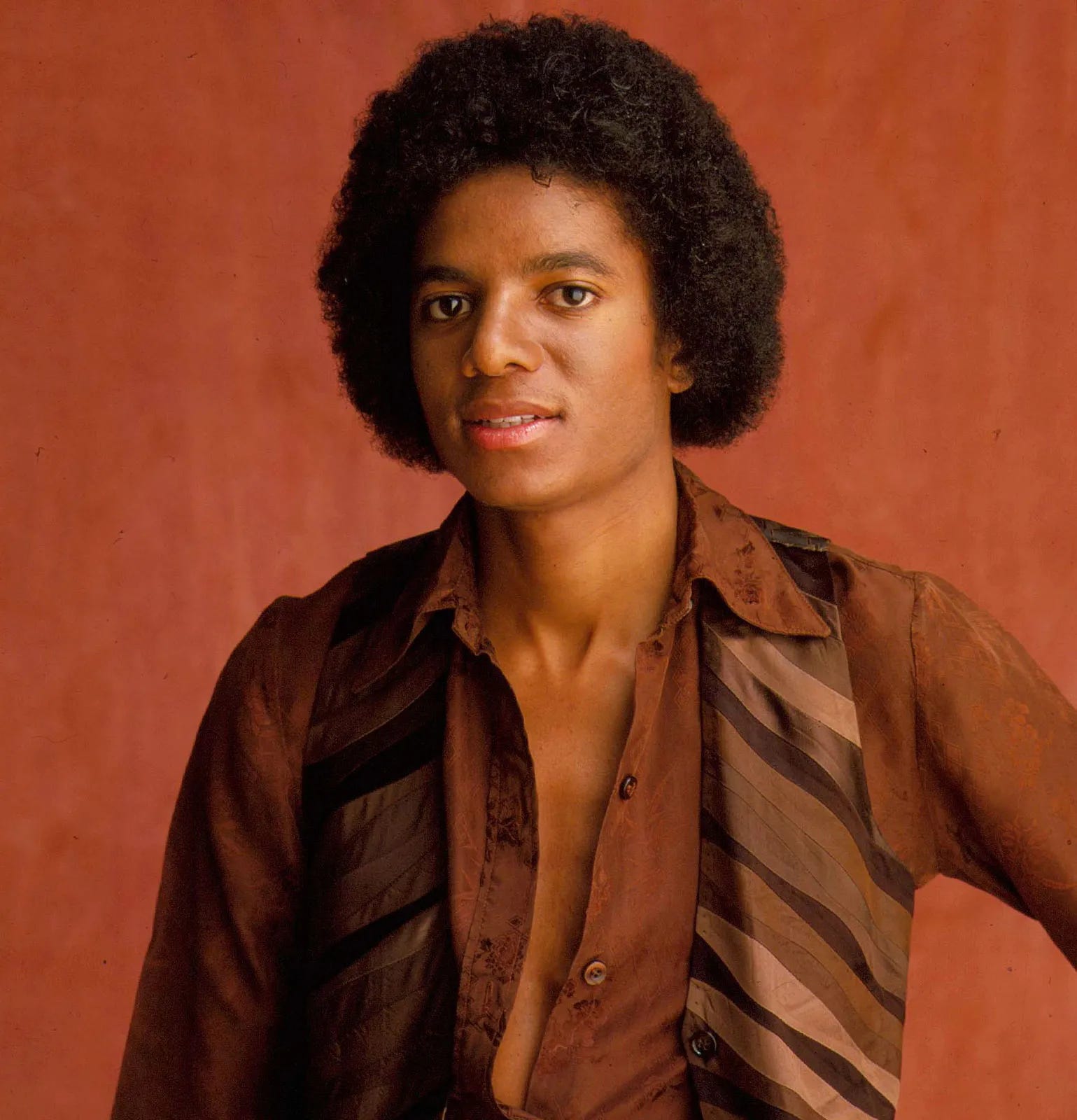
I take an interest in the spiritual practices of artists, broadly defined. Working in arts and letters is so precarious that most who do, in whatever fashion, embrace self-developmental philosophies. This is necessary to navigate unremitting demands and uncertainties.
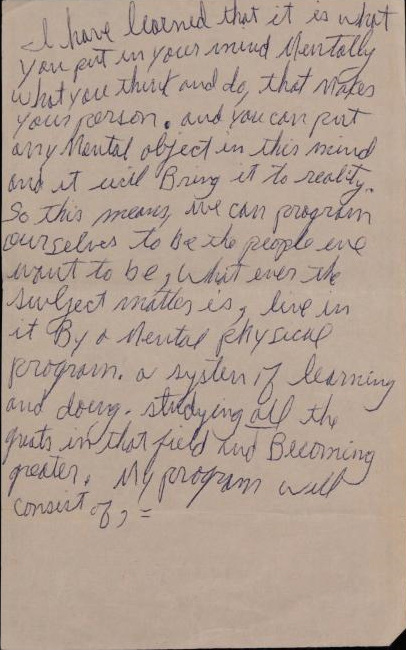
In that vein, I share a small revelation about pop legend Michael Jackson’s (1958-2009) personal code. It appears in a remarkable and undated handwritten note.
His manifesto beckons its reader—or perhaps Michael himself—to complete it. He left a blank space at the end to enter a private aim.
I write this little article with neither veneration nor condemnation of the man. As an artist, Michael was universally feted. As a private figure, he was jarringly flawed, like most of us. We rush to condemn to salve personal weakness. Those who do so loudest and fastest are mirror-gazing. My focus is on his work. I believe that every artist, of whatever type, deserves to be remembered—though not exclusively—for his finest output.
Before getting to the note, I offer related background.
Michael was no stranger to the path of intent. In my 2014 history of the positive-mind movement, One Simple Idea, I wrote that Michael called his “favorite book” British social reformer and New Thought pioneer James Allen’s 1903 mind-power meditation, As a Man Thinketh. I memorialize Allen—a singularly profound man who lived his philosophy—in the below-linked article.
When Michael was seventeen in the summer of 1976—not much younger than he appears atop this article—the performer met an adolescent horseback-riding partner, Suzi Nash, outside Philadelphia, where he and his brothers were recording. He later told his equestrian friend that his “favorite book in the world” is Allen’s slender classic.

As creditably reported by Patti Mengers in “Radnor Family Had Inside Look at Michael Jackson” in the Delaware County Daily Times (PA) on June 28, 2009, Michael and his brothers took a day-long break from their recording session to ride the Nash family’s horses in Valley Forge National Historical Park.
“He liked antiques; he liked old books,” said Suzi, who befriended the star for more than a decade.
Mengers writes:
In later years, on her way to visit Jackson during one of his Philadelphia concert gigs, Suzi grabbed an old book from her parents’ shelf without noticing the title. She just wanted to give Jackson a gift and she remembered his fondness for antique tomes. As fate would have it, it was As a Man Thinketh . . .
“He looked at me and almost kind of jumped back. He said, ‘What made you give me this? What made you pick this one?’” said Suzi.
He told her it was his “favorite book in the world.”
Back to Michael’s note. I discovered his manifesto in its original form during a 2019 visit to Atlantic City. It was displayed at the Hard Rock Hotel & Casino, which showcased it as a handwriting-authenticated but undated document. Appearing below in its original hand, the message is written in cursive on the back of a laundry-service order form.
The writing comports with Allen’s ideals in As a Man Thinketh and other suggestions the pop star recorded about creativity.
As noted, you will see space at the end for the reader—or perhaps Michael himself—to complete it. I reproduce it verbatim.
I have learned that it is what you put in your mind Mentally what you think and do, that makes your person. and you can put any Mental object in this mind and it will Bring it into reality. So this means, we can program ourselves to be the people we want to be, whatever the subject matter is, live in it By a Mental physical program, a system of learning and doing, studying all the greats in that field and Becoming greater. My program will consist of, =
I invite you, as he did, to experiment with the implied powers of intent and self-development.
My conviction, explored in articles below, is that the arc of experience—barring extreme countervailing currents, which do occur (a flaw I address in New Thought)—mirrors self-conviction.
Do you doubt me? Take a moment now—this instant—to consider your earliest recallable fantasies and dreams from whatever age they are retained, perhaps four or even younger.
Such images are immeasurably valuable because they encode concepts of self relatively untouched by peer pressure, which soon proves overwhelming.
Do you discern a bridge of incident, perhaps joyous, perhaps melancholy, between your earliest self-conceptions and present adulthood? Consider what symmetry, if any, exists. Such an exercise can uncover extraordinary tendrils of connection between psyche and selfhood.
Perception and experience are intimate, inseparable, and symmetrical in ways that challenge concepts of reality as an objectively freestanding verity.
This is—in my own words and conceiving—an element of the outlook Michael ponders in his meditation.
Complete his note. Try.
Further reading:


I was at the Hard Rock in Atlantic CIty for Xmas 2024 (of all places!) and was also struck by this note! I photographed it, but would not have guessed at its inspiration. I've written about our culture's complex relationship to MJ, and I agree, whatever actually happened, his legacy cannot be denied.
Thank you for putting this out there, Mitch. As a childhood trauma survivor, I appreciate MJs manifesto (or as you say - his *selection* to be more than his experience). Books like Allen's have been an anchor for my heart over the decades. To move from trauma to transcendence and from certain aspects of resilience to transformation. I wish more people would write about such truths, so that the majority could be free to live their best lives and selves. Perhaps then, the "mirror gazing" will stop and we will finally *see* one another - with boundless beauty and love and be less separated and polarized. I pray for those moments, in time. /bow